


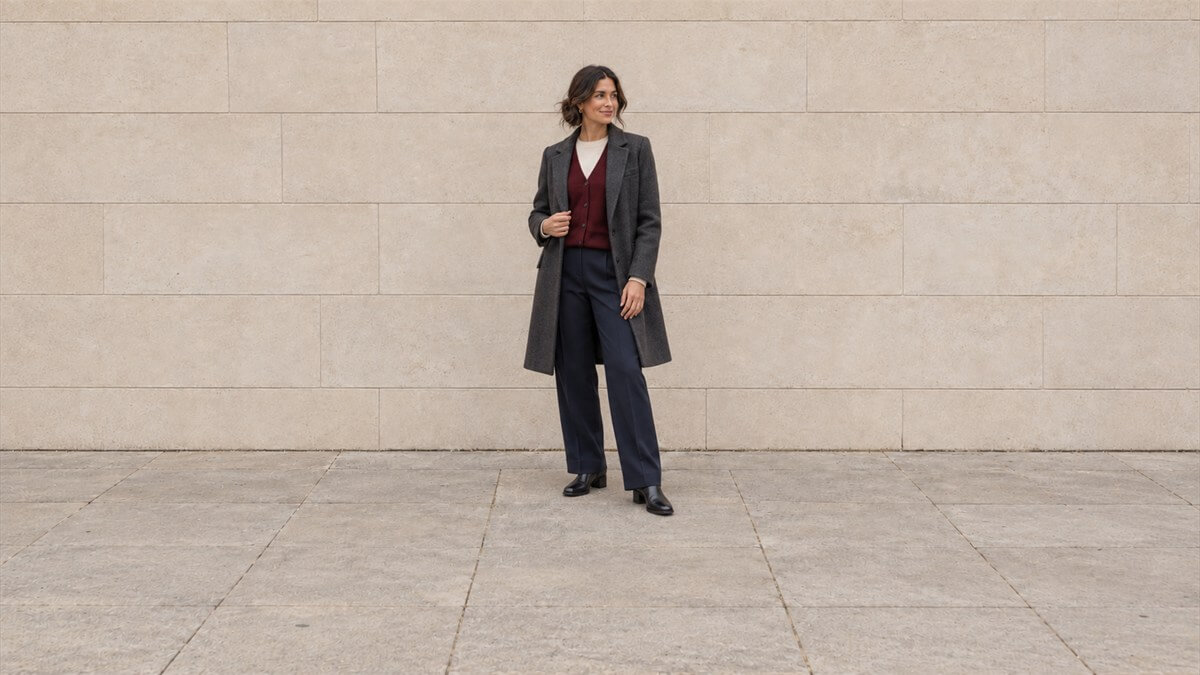
A thick jumper can feel cosy at home and awkward as soon as you try to pull a coat over it. The sleeves bunch, the shoulders pull and, ten minutes into your journey, you want to take everything off again.
To layer clothes for winter without feeling bulky, start with a comfortable, close-fitting base, add a middle layer with enough room to move, and finish with a coat that accommodates both. Choose pieces you can remove independently, then check the outfit sitting down as well as standing up.
This is a guide to everyday dressing: commuting, meeting friends and moving between cold streets and heated rooms. The aim is comfortable layers that work with the clothes you already like wearing.
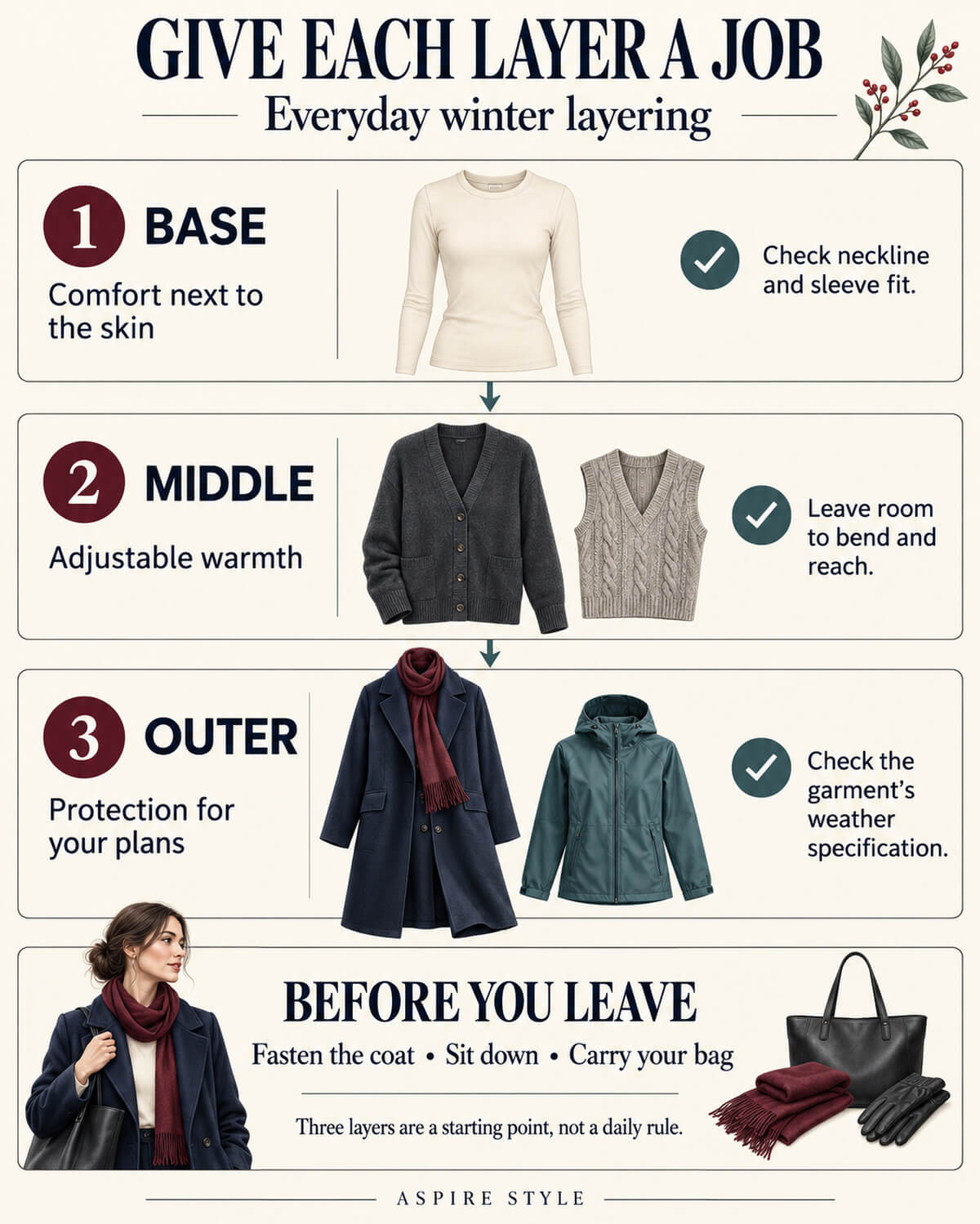
Give each layer a job
Before adding another jumper, work out what your outfit is missing. Are you cold through the body, exposed around the neck, or uncomfortable because rain is soaking your outer layer? Those are different problems.
Patagonia’s cold-weather layering guide separates clothing into a moisture-managing base, an insulating middle and an outer shell that protects against the weather. You can borrow that principle for an everyday wardrobe without buying a full set of outdoor clothing.
- Next to the skin: a long-sleeved top or thermal that feels comfortable under the rest of the outfit.
- Through the middle: a jumper, cardigan or other layer that provides the warmth you need.
- On the outside: a coat or jacket chosen for the forecast and the time you will spend outdoors.
Three layers are a starting point, not a daily requirement. A warm coat over a light knit may suit a short journey; a longer wait outdoors may call for more insulation.
Start with the neckline and sleeves
The best base layer is one you can forget about once it is on. It should follow your body comfortably without pulling at the shoulders or restricting your arms. Try lifting both hands above your head: if the hem rides up and stays there, check the length or fit.
Match its neckline to the clothes above it. A scoop neck can disappear beneath an open-neck shirt; a crew neck looks deliberate under a cardigan; a thin roll neck makes a sleeveless dress more useful in winter.
Long sleeves work well under roomy knitwear. Under a closely cut blazer, a sleeveless thermal or fine short-sleeved top may be easier to wear. You are solving a fit problem, so the answer need not be a smaller size.
For a brisk walk or an active commute, a base designed to manage perspiration may be useful. For a short trip followed by a warm office, prioritise an indoor outfit you can comfortably wear after removing your coat.
Check the middle layer before blaming the coat
A fine cardigan and a chunky cable-knit jumper occupy very different amounts of space. If a coat fits well over one but pulls over the other, keep the heavier knit for a roomier jacket and use the cardigan under the closer-fitting coat.
Pay particular attention to sleeves. A dropped shoulder or wide sleeve can gather under a narrow coat armhole even when the body of the jumper fits. Smooth the sleeve down before putting the coat on, then bend your elbows and reach forwards.
A knitted vest over a long-sleeved top is another option when the arms feel crowded. An open cardigan is useful if you often move between different temperatures. Neither needs to be bought specially if a similar piece already works in your wardrobe.
Try the coat fastened, with your bag
Put the complete outfit on before choosing the outer layer. Fasten the coat, sit down and put your everyday bag over your shoulder. The front should close without pulling, the sleeves should allow movement and the bag strap should stay usable.
If you need another insulating layer, check the fit again. Squeezing more clothes into an already tight coat is rarely comfortable. A roomier cut may help, but compare the actual measurements rather than assuming that going up one size will fix every fit issue.
A tailored wool coat is a styling option for a dry day; its appearance alone tells you little about rain protection. REI’s rainwear guide distinguishes water-resistant clothing, which can cope with brief light rain, from waterproof rainwear. Check the garment’s specification when a wet walk is part of your day.

Four everyday layering combinations
1. A fine top, cardigan and straight-leg trousers
Try a cream long-sleeved top, a charcoal cardigan and navy trousers with ankle boots. Add a coat roomy enough for the cardigan and a scarf that sits comfortably inside the collar. Indoors, the cardigan can come off while the base still looks like a complete outfit.
2. A thin roll neck under a sleeveless dress
Use a smooth, fine roll neck beneath a dress with enough room through the bust and armholes. Add opaque tights, boots and a coat. Check that the dress lining does not catch on the top when you sit or walk; if it does, try a smoother base fabric rather than repeatedly adjusting the dress.
3. A thermal, shirt and knitted vest
A discreet thermal under a shirt, with a knitted vest over it, gives you several options through the day. Keep the shirt sleeves relatively slim if you are adding a tailored coat. A patterned shirt can provide the interest, leaving the vest and trousers in simple colours.
4. A fine jumper under a padded jacket
If your jacket already provides plenty of insulation, start with a lighter jumper underneath. Add jeans or trousers and footwear suited to your route. This is particularly useful for a journey that ends somewhere warm, where an oversized jumper would be difficult to remove.
Fix bunching at the waist, cuffs and ankles
Small overlaps often cause more discomfort than the number of layers. Tucking a thermal, shirt and thick jumper into one waistband can feel restrictive when you sit. Tuck the thin base if you want to, leave the jumper loose, and check that the shirt length still works.
At the wrists, avoid forcing several turned-back cuffs into a narrow coat sleeve. Around the ankles, test your boots with the socks you will actually wear. Thicker socks should still leave room to move your toes; they should not turn a comfortable boot into a tight one.
Use scarves, hats and gloves to cover exposed areas rather than automatically adding another bulky torso layer. Their colour can also connect the outfit: a burgundy scarf can echo a bag or a stripe without every accessory matching.
A final check before you leave
Spend a moment walking, sitting and carrying your bag in the full outfit. Decide where the coat, scarf or cardigan will go when you arrive. If removing one piece leaves you uncomfortable or wearing something you intended only as underwear, adjust the layers before setting off.
Take a quick photograph of combinations that work. Saving a few reliable outfits makes the next cold morning easier and shows which pieces earn their place in your capsule wardrobe.


