


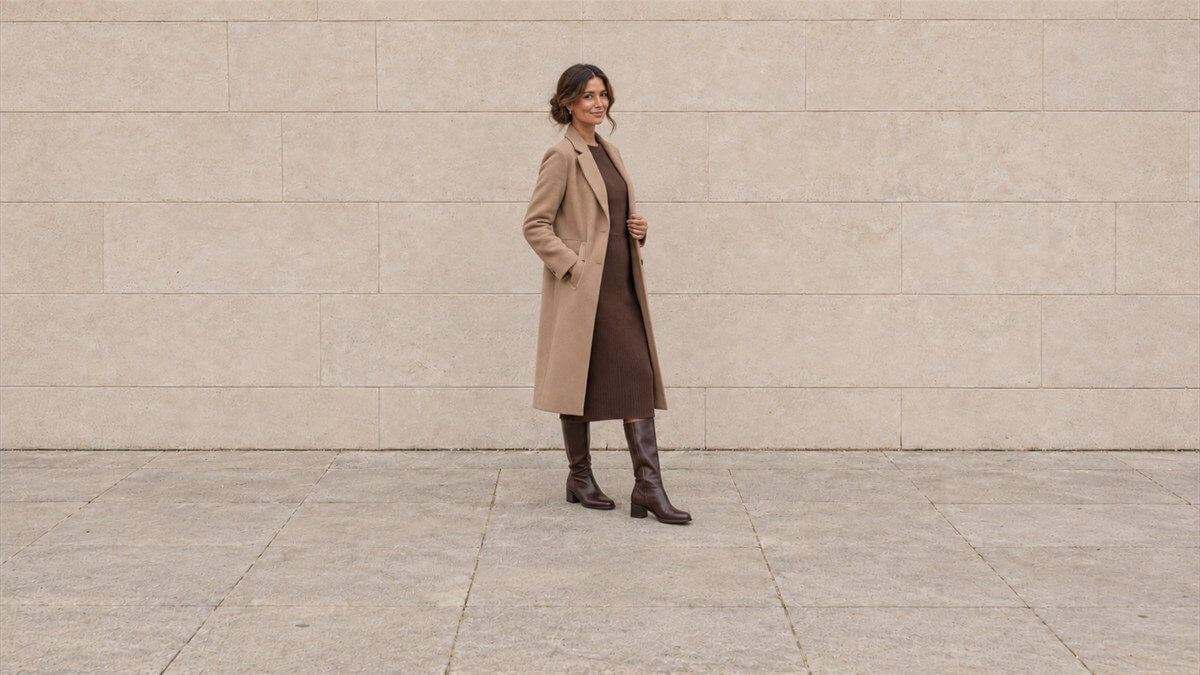
Style a knitted dress by building the outfit in four stages: choose comfortable underlayers, add the dress, put on your shoes or boots, then try the outer layer over everything. A fine knitted midi might fit easily beneath a blazer; a heavier jumper dress may need more room through the coat’s sleeves and shoulders.
Start with a dress you already enjoy wearing. The aim is to make it useful for the day ahead, whether that means a walk to work, lunch with friends or a relaxed weekend. You can change the feel of the outfit through footwear and layers without needing a different dress for every occasion.
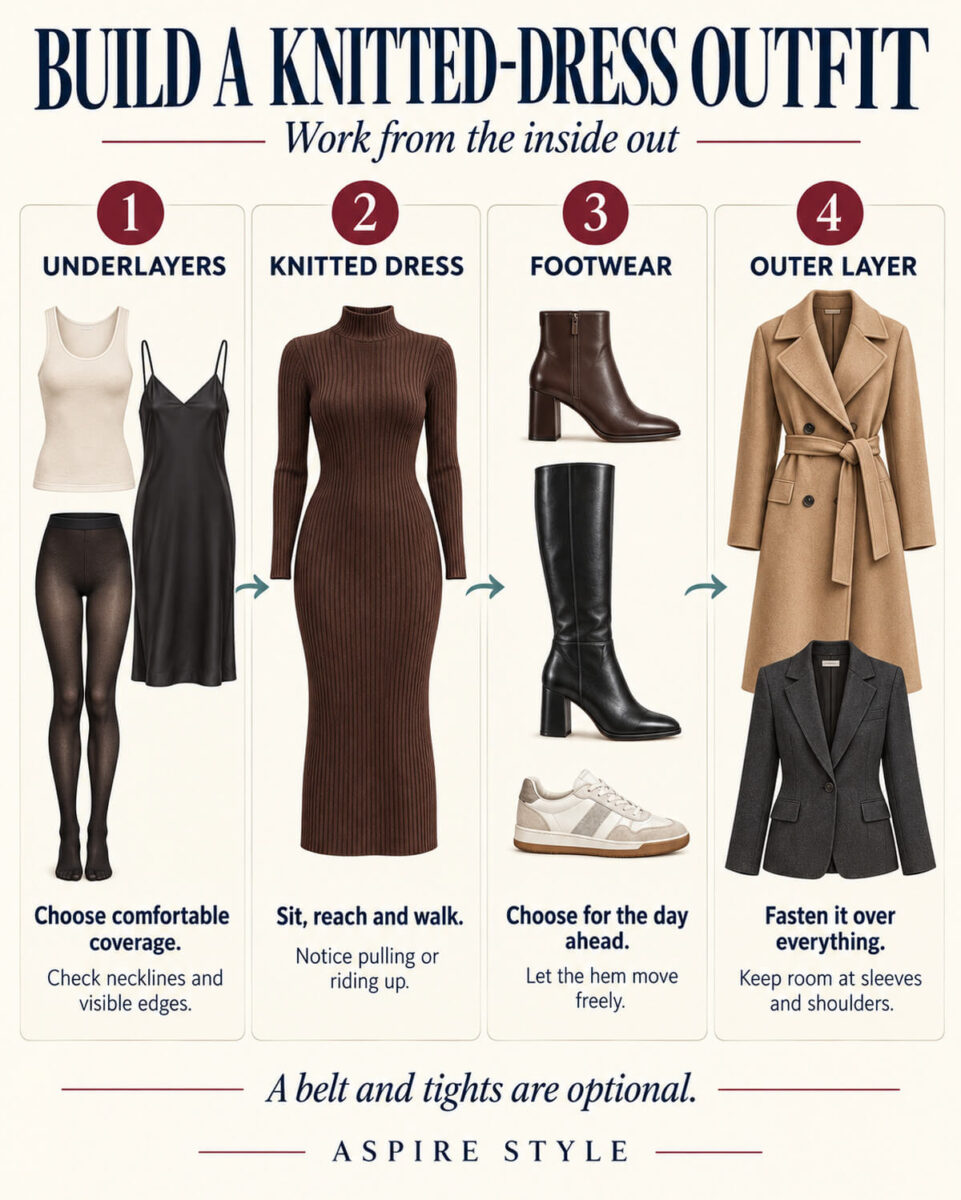
Look at the dress before choosing the layers
Knitted dresses range from fine, close-fitting styles to looser cable knits and substantial roll necks. Length, sleeve shape, neckline and the amount of room around the body all affect what you can comfortably add.
Try the dress on its own first. Sit down, reach forward and walk normally. Notice any places where it pulls, rides up or feels restrictive. Extra layers are easier to choose once you know how the dress behaves.
Then think about the day. A warm office after a cold commute calls for layers you can remove. Time outside in rain calls for suitable weather protection as well as an outfit you like indoors.
What to wear under a knitted dress
Choose underwear and underlayers that feel comfortable with the particular dress. A lightweight vest or close-fitting base layer is an option if there is space for it; check that the neckline and sleeves sit where you want them.
A slip can be worth trying if you prefer the way the dress moves over it. Look for a length that stays beneath the dress hem, including any split, and check it while seated. Shapewear is a personal choice, not something a knitted dress requires.
Try the full combination in daylight if coverage matters to you. Fine fabric and stretched areas can look different in stronger light. If an underlayer creates a visible edge you dislike, compare another cut or decide whether that layer is needed.
Choosing tights
Tights offer another way to change coverage and the look of the outfit. Denier describes the weight of the yarn; higher numbers generally indicate a more opaque finish. M&S’s tights guide explains the categories.
Try the tights with both the dress and footwear. Check the waistband, toe comfort and how the dress moves over them. Choose warmth for the whole outfit and the conditions rather than treating a denier number as an outdoor temperature rating.
Which boots or shoes work with a knitted dress?
| Footwear | A combination to try | Check the fit |
|---|---|---|
| Ankle boots | A midi dress, tights if wanted, and a jacket or coat | The visible gap or overlap feels right when standing and sitting. |
| Knee-high boots | A dress hem that falls towards or over the shaft | The boot fits comfortably and the dress moves freely over it. |
| Trainers | A relaxed knit with a casual jacket | The hem stays clear of the ground and the shoes suit your walking plans. |
| Loafers or other flats | A finer knit dress with a cardigan or blazer | The footwear works with the weather, hosiery and dress code. |
The boot shaft can sit beneath the dress hem or remain visible. Neither arrangement requires a fixed gap. Put the shoes on and look at the complete outfit; the dress length on your body matters more than whether it is labelled mini or midi.
Choose a heel only if you want one. Flat boots and trainers give you useful alternatives. If you wear thicker socks in colder weather, include those in the fitting rather than adding them after you have decided the boots are comfortable.
What to wear over a knitted dress
A longer coat
Try a longer coat over a knitted midi when you want another substantial layer. A camel coat with a chocolate dress is an easy colour combination to start with; navy, grey and black offer other options.
Fasten the coat over the dress and check the shoulders, upper arms and chest. There should be room for normal movement. A heavier knit may feel crowded inside a coat that is comfortable over a shirt.
A blazer
A blazer can work over a finer dress when you want a more tailored outline. Check that the dress sleeves sit smoothly inside it and that you can move your arms without pulling. For work, use the actual dress code to guide the choice of length, coverage and footwear.
A shorter jacket or cardigan
A shorter layer leaves more of the dress visible and can change the proportions without a belt. Try a casual jacket with a relaxed dress and trainers, or a cardigan you can remove easily indoors.
If the jacket meets the dress at a point you do not enjoy, compare another length. There is no rule that your coat must exactly match the dress hem. These are established layering options; Izabel London’s knitted-dress guide also explores jackets, blazers and different footwear.
Three knitted-dress outfits to try
Chocolate dress, camel coat and brown boots
Start with a chocolate knitted midi and brown knee-high boots. Add tights or another comfortable underlayer if needed, then try a camel coat over the top. Keep it open indoors if that is comfortable, and check that it closes easily when you head outside.
Relaxed jumper dress, trainers and a casual jacket
Pair a relaxed dress with trainers you enjoy walking in. A short jacket gives you an extra layer without covering the whole dress. Add suitable hosiery for colder weather, and switch the outer layer if the day calls for rain protection.
Fine navy knit, blazer and ankle boots
Try a fine navy dress with a blazer and ankle boots for a smarter setting. Wear it without a belt first. If you want waist definition, compare a comfortable belt and check that it stays where you want it as you move.
The same coats and footwear can work across several outfits. Our capsule wardrobe guide helps you plan those repeated combinations. For an alternative using separates, try a midi skirt with a jumper.

Adjust the outfit for a cold commute and a warm room
Make the layers you are likely to remove easy to carry or store. A scarf and coat can come off at a desk without changing the outfit underneath. A cardigan or blazer gives you another adjustment if the room is cooler than expected.
Warmth and rain protection are different jobs. Check your coat and footwear’s stated weather performance; a thick knit or sturdy-looking boot does not establish waterproofness. Choose for the time you expect to spend outside and how much walking you will do.
If you keep overheating indoors, try a lighter dress with removable outer layers next time. If you are still cold outside, reconsider the complete outfit rather than relying on the dress alone.
Questions about knitted dresses
Can I wear a knitted dress without a belt?
Yes. A belt changes the outline but is optional. Wear the dress loose if that feels better, or use the length of a jacket to change how the outfit looks.
Does a knitted dress always need tights?
No. Choose bare legs, tights or another comfortable layer according to coverage, weather and preference. Check the outfit while sitting as well as standing.
How should I care for a wool knitted dress?
Follow its care label, including instructions for washing and drying. Woolmark recommends flat drying wool knitwear unless the label permits tumble drying. Hanging a wet knit can stretch it under its own weight.
Care requirements vary, so use the label on your dress rather than assuming every knit needs the same treatment. Our guide to keeping clothes useful for longer has more on care and repeat wear.
Build your first outfit from the inside out: underlayers, dress, footwear and coat. Once the whole combination feels comfortable, photograph it for your own reference so it is easy to repeat.


