


Updated 8 October 2026.
The safest way to clean jewellery depends on its metal, stones, finish and construction. A method that suits a plain gold band may damage a pearl necklace or a plated ring. Start by identifying the whole piece, then choose the gentlest suitable method.
This guide covers everyday care at home. If a stone moves, a claw catches on clothing, or you cannot identify a material, put the piece aside for a jeweller to assess before cleaning it.
Before you start: check more than the metal
Look at the receipt, maker’s care instructions and any hallmark. A gold setting does not mean that its gemstones can tolerate the same treatment. Glued decorations, old repairs and treated stones need particular care. The Gemological Institute of America (GIA) recommends asking about treatments and cleaning requirements when you buy a piece.
- Know the materials: solid gold, sterling silver, plating and costume jewellery need different care.
- Check its condition: stop if you see a loose stone, bent claw or damaged clasp.
- Prepare the space: use a small bowl on a clear surface, with a soft towel underneath. Keep jewellery away from an open plughole.
How to clean plain gold and suitable diamond jewellery
For a sound piece whose maker permits washing, use lukewarm water with a little mild washing-up liquid. Gently loosen dirt with a very soft brush, rinse in a separate bowl of clean water and dry with a soft, lint-free cloth. Do not scrub the setting or force a brush beneath a stone. Follow any more specific instructions supplied with the piece.
A diamond’s hardness does not make its ring indestructible. Diamonds can chip after a knock, while claws and settings can loosen with wear. GIA’s diamond care guidance recommends gentle cleaning and professional inspection when needed. If your ring contains other stones, choose care suitable for the most delicate component.
A useful example: a plain wedding band and a pearl-set gold ring may look equally sturdy. The pearl changes the cleaning method, so do not put both into the same cleaning bath.

How to clean sterling silver without damaging the finish
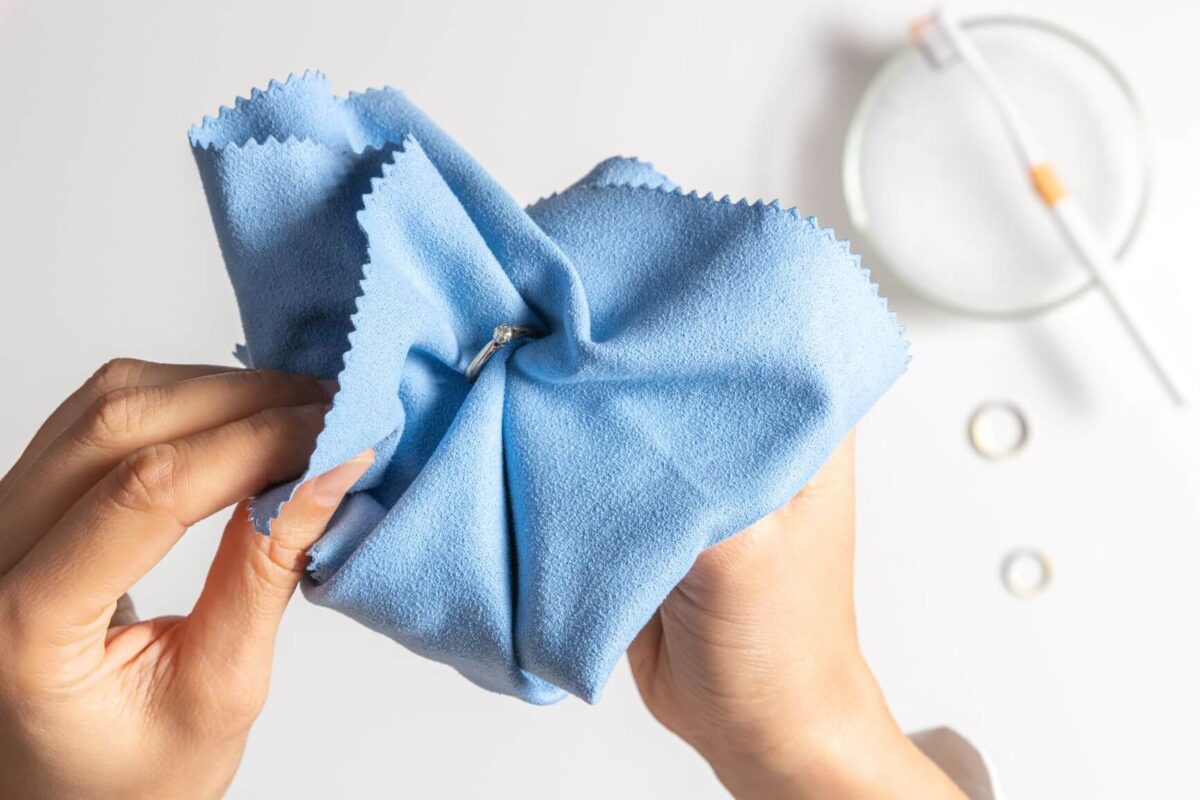
For ordinary, uncoated sterling silver, use a silver-cleaning cloth or a cleaner specifically approved for the piece. Follow its instructions and work gently. Tiffany’s silver care advice warns that polishing can remove an intentionally darkened, oxidised finish. Tarnish and a decorative blackened detail are not always the same thing.
Check whether a silver piece also has plating, pearls, enamel or glued parts before treating it. If a cleaner is only labelled suitable for silver, that does not establish that it is suitable for everything attached to the silver.
Pearls, plated jewellery and delicate gemstones
Pearls
Wipe pearls gently with a soft cloth after wearing them. Keep perfume, hairspray and household chemicals away from their surface. Never use steam or an ultrasonic cleaner. If a strung necklace gets wet during appropriate cleaning, allow it to dry completely, laid flat, before wearing it; follow the maker’s instructions for the thread and clasp. GIA’s pearl care guide explains why pearls need gentler treatment than many other gems.
Gold-plated and costume jewellery
Start with the maker’s care instructions and a gentle wipe with a soft cloth. Avoid an abrasive polishing routine: it can wear away plating. Do not assume a plated piece can be soaked, especially if it has glued decorations. When its materials are unknown, ask the maker or a jeweller instead of testing a household cleaning recipe.
Opals, emeralds and antique pieces
Gemstone treatments and old settings can make cleaning more complicated. Ask a jeweller which method is appropriate for the specific piece. Keep home ultrasonic cleaners out of the routine unless a professional has confirmed that the entire item is suitable.
Which household cleaners should you avoid?
Skip toothpaste, scouring powders and abrasive baking-soda scrubs. Do not use bleach or a homemade mixture of cleaners. GIA’s jewellery cleaning guidance cautions against abrasives and chemical damage. Lemon juice, vinegar and alcohol are especially poor experiments for delicate pieces such as pearls. A recipe being described as “natural” does not establish that it is safe for jewellery.
Make cleaning easier with everyday care
Store pieces separately so they do not rub together. Keep suitable silver in an anti-tarnish pouch, and take jewellery off before tasks involving cleaning products. Our guide to organising jewellery can help you give frequently worn pieces their own place.
For a small everyday jewellery collection, keep a note of each piece’s material and care instructions. That makes it easier to clean a favourite necklace correctly instead of treating everything in the jewellery box alike.


